

Dalvia Sante
Free up medical time with trusted generative AI
Service Design Lead: AI×UX
2024
Context: La Poste Santé & Autonomie, bridging home care services with trusted health data infrastructure for professionals and patients across France.
Scope: POC to production-ready app (iOS), 8-month strategic initiative to design and deploy AI clinical assistant.
Recognition: AMI for Efficiency winner (oncology) France's national healthcare innovation program
Note:
While this project was in the French healthcare system, the core challenges (integrating AI into clinical workflows, building clinician trust, navigating healthcare governance) are universal.
I'm excited to apply these learnings to Australia's healthcare and aged care sectors.
The challenge
Market reality (2023): 90% of French healthcare professionals were already using AI tools but primarily generic solutions like ChatGPT, Gemini, and Copilot.
These tools posed major risks: non-compliance with GDPR, no medical certification, and lack of clinical validation.
The clinical need: Doctors treating patients with chronic conditions (oncology, psychology, long-term pathologies) spent 15-30 minutes per consultation searching fragmented medical information across multiple systems.
Our question:
“How might we create a healthcare AI that doctors would actually trust and adopt while ensuring clinical safety, data sovereignty, and regulatory compliance?”
Key Insight
& Strategic Pivot
Our initial hypothesis: A universal medical summary would be the "holy grail."
Co-design with specialists proved us wrong. An oncologist treating breast cancer needs fundamentally different information than a psychologist managing depression, even for the same patient.
The pivot:
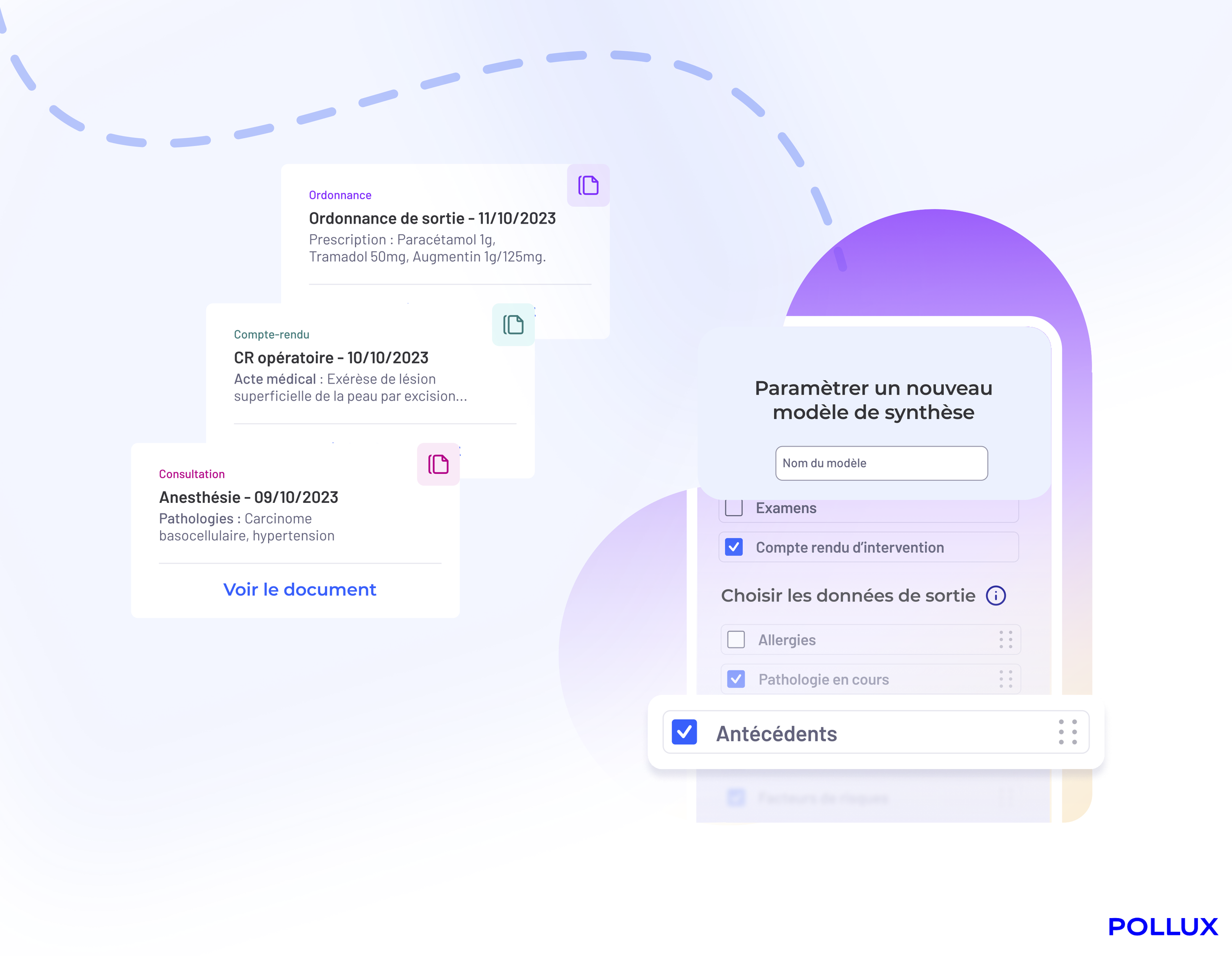
We structured Dalvia Santé around specialty-specific portfolios (oncology, psychology, chronic disease) each tailored to the clinician's actual workflow.
This wasn't a technology problem. It was a data access and synthesis problem.
Methodology
Design for governance from day 1: Embedded clinical validation workflow into service design, anticipating regulatory scrutiny. This prevented compliance blockers during expansion.
01. Field research with surgeons
Expert interviews with clinical governance and medical informatics
Not the journey in slide decks. The real one. We observed first consultations and follow-up visits, interviewed surgeons between patients, and mapped what actually happens vs. what the process says should happen.
02. Co-design workshop with clinicians
Mixed sessions with surgeons, our stakeholders and our data science team. We defined together what "useful" looks like in a 10-minute window before a consult.

03. Idea-gen workshop:
3 AI types × 3 journey moments
Each Data Scientist owned one AI capability.
Each Business Expert owned one journey theme.
This kept conversations grounded: no "AI for AI's sake", only "what problem does this solve?"
04. Prototyped what doctors actually asked for
Verbatim from research: "I just want a clean summary of the case, and help with writing my handoff letter."
Design Decision: Trust Through Transparency
The challenge: 90% of French doctors already used AI, but generic tools had created skepticism. How could we build trust?
Our approach: Sovereign, transparent, human-verified.
French health data sovereignty: Partnered with LPSA alliance ensuring patient data never leaves France
Human verification at every stage: Specialist physicians reviewed AI outputs during development and continue to audit in production
Transparent AI reasoning: Show source data, display confidence levels, clear distinction between "verified clinical data" and "AI-generated synthesis"
Trust wasn't just about interface design, it was about service design for governance.
Our health data is our heritage. We must both protect it and leverage it to improve care within a sovereign and transparent framework."
Olivier Barets, DGA La Poste Santé & Autonomie
The solution
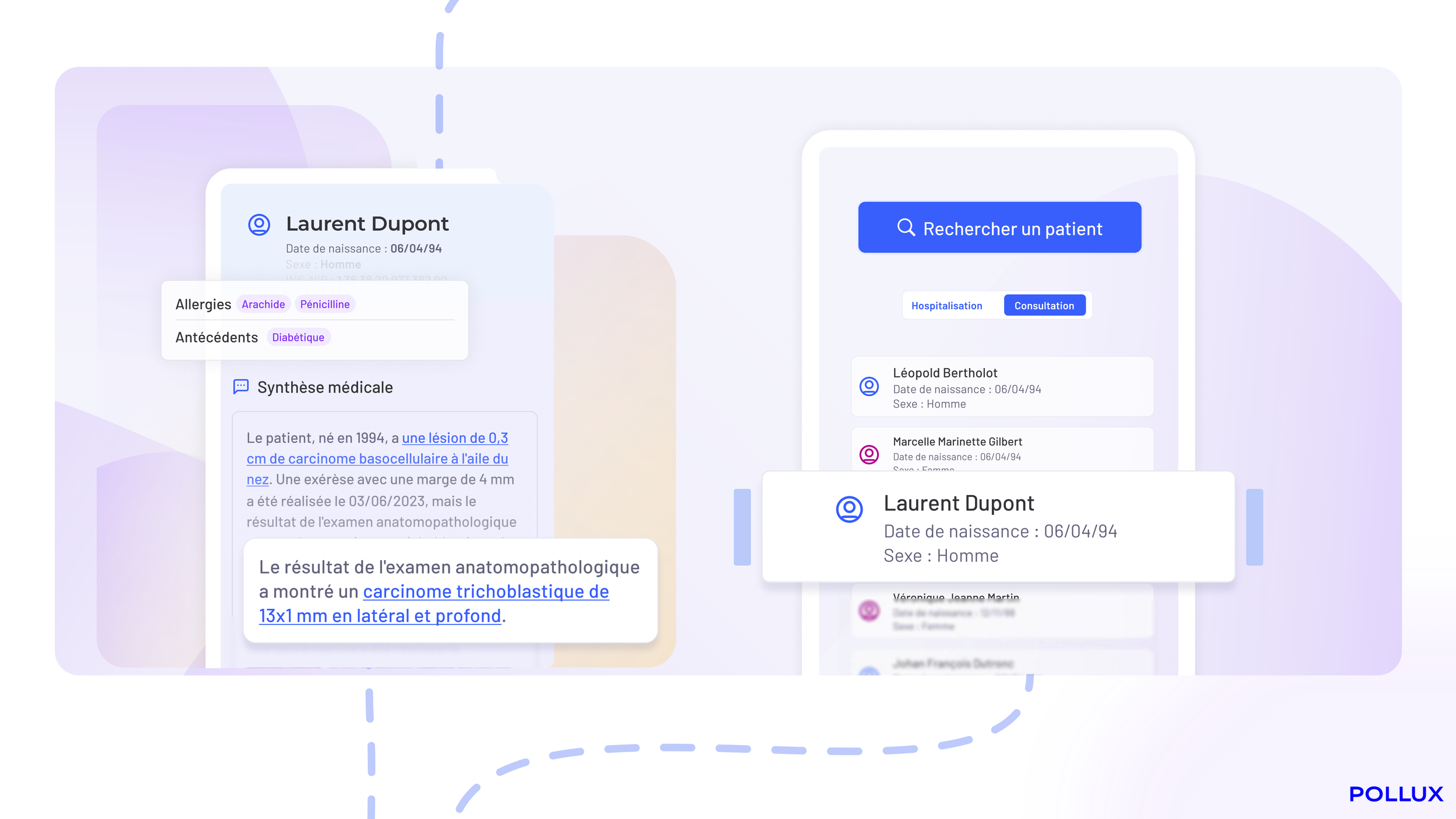
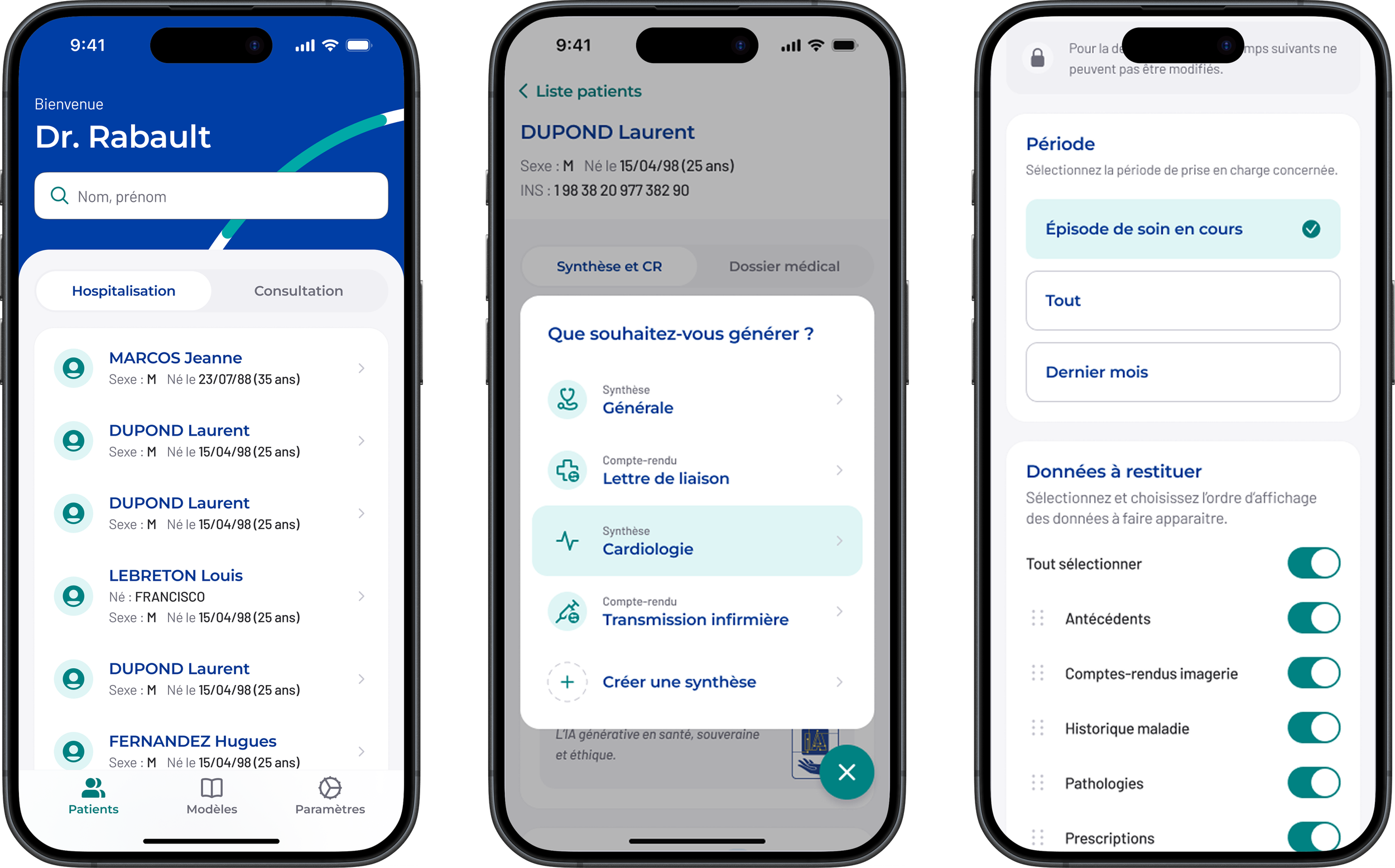
A mobile AI assistant with specialty-specific portfolios that:
Summarizes patient data before the consult
Drafts the handoff letter after
Shows sources and confidence levels
Two prototypes delivered:
Design prototype (Figma) to sell the experience to executives and at trade shows
AI prototype (Streamlit) with anonymized data to prove feasibility
01. Clinical impact
Patient file review: 30+ min → 2-3 min (90% time reduction)
Specialty-specific summaries rated "clinically actionable" by physicians

Results
02. Validation
AMI for Efficiency winner (oncology)
3-month pilot with specialist physicians deployed

03. Future roadmap::
Dalvia Vox (voice recognition and consultation transcription) in development for 2026

What I learned
Designing AI for healthcare isn't a technology problem, it's a trust problem.
Hypothesis testing with specialists is non-negotiable.
Data access > AI sophistication.